
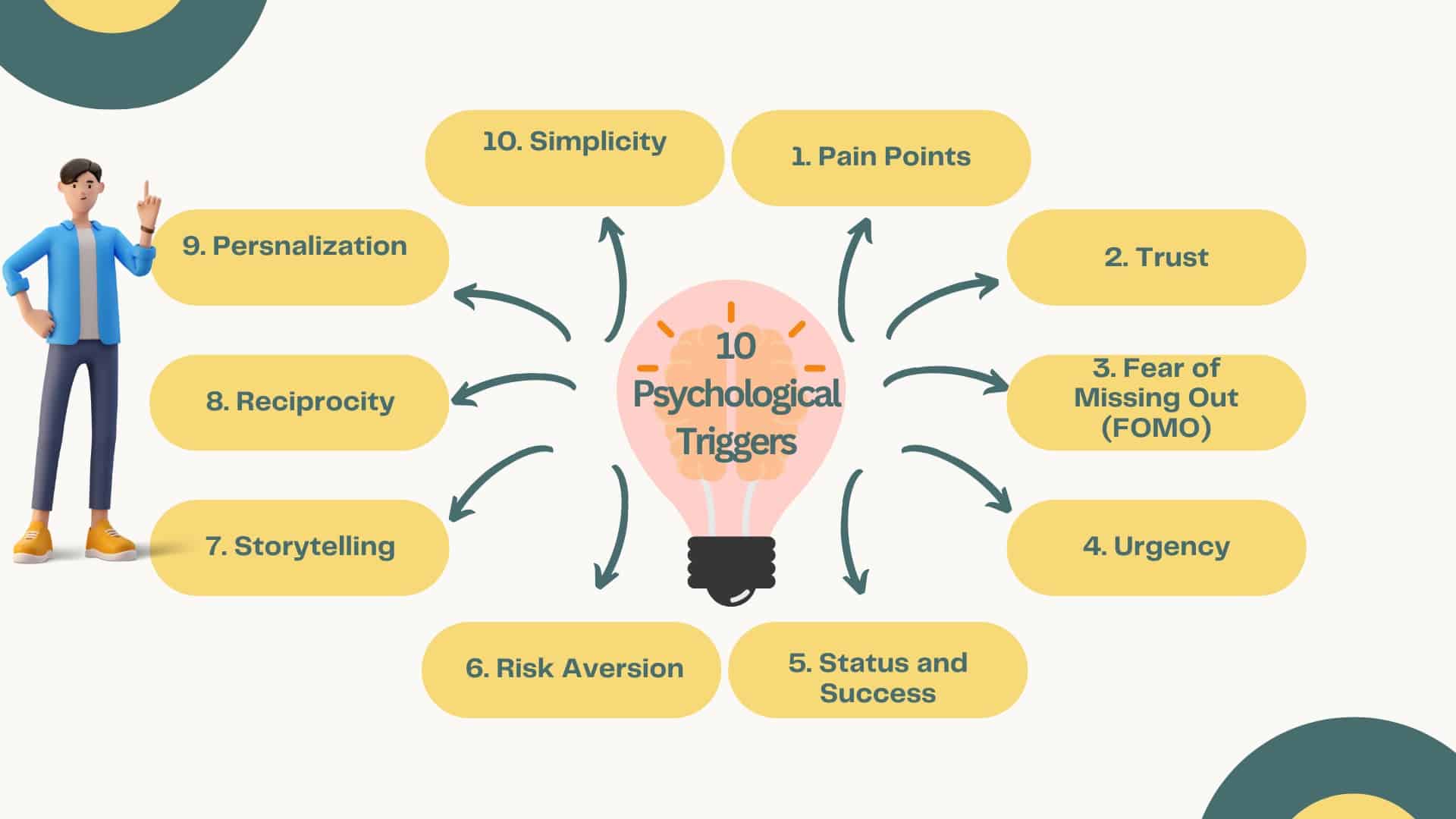
In competitive markets, success in marketing is not only about tools, platforms, or budgets. It is deeply rooted in understanding human behavior and decision-making. In b2b-marketing, psychology plays a crucial role because business buyers are still human—they respond to trust, authority, risk perception, and emotional triggers, even when making logical decisions. This is why b2b-marketing agencies focus heavily on psychological principles when designing strategies that convert prospects into clients.
Modern B2B buyers are analytical, but their decisions are influenced by subconscious factors that shape how they perceive value and risk. Understanding these psychological drivers is essential for building effective marketing systems.
Understanding Buyer Psychology in B2B Marketing
Buyer psychology in B2B marketing refers to how decision-makers think, evaluate, and choose solutions. Unlike simple consumer purchases, B2B decisions often involve multiple stakeholders, longer evaluation cycles, and higher financial stakes.
In b2b-marketing, psychology helps explain why buyers prefer certain brands, why they hesitate, and what motivates them to take action. B2B marketing agencies study these behavioral patterns to design messaging that aligns with how real buyers think.
The Role of Trust in Decision-Making
Trust is the foundation of all B2B transactions. Without trust, even the best product or service will struggle to convert leads.
In b2b-marketing, trust is built through consistency, transparency, and credibility. Buyers look for proof such as case studies, testimonials, and industry authority. B2B marketing agencies focus on strengthening trust signals across all marketing channels to reduce hesitation and increase conversion rates.
Authority Bias and Perceived Expertise
People naturally tend to trust experts and authoritative sources. This psychological principle is known as authority bias.
In b2b-marketing, businesses that position themselves as industry experts are more likely to influence decision-making. B2B marketing agencies use content marketing, thought leadership, and SEO strategies to establish authority and make brands appear more credible in the eyes of potential clients.
The Power of Social Proof in B2B Decisions
Social proof is one of the strongest psychological triggers in marketing. Buyers feel more confident when they see that others have already chosen and benefited from a solution.
In b2b-marketing, social proof includes client reviews, case studies, testimonials, and brand partnerships. B2B marketing agencies strategically place these elements across websites and campaigns to reduce uncertainty and increase trust.
Risk Reduction as a Key Psychological Factor
B2B buyers are highly focused on minimizing risk. Because decisions often involve large investments, they prefer solutions that feel safe and proven.
In b2b-marketing, reducing perceived risk is essential for conversion. B2B marketing agencies address this by providing guarantees, clear communication, performance data, and detailed case studies that demonstrate reliability.
Emotional Triggers in Rational Decision-Making
Although B2B marketing appears logical, emotions still play a major role. Fear of failure, desire for success, and pressure from stakeholders all influence decisions.
In b2b-marketing, emotional triggers are used carefully alongside logical arguments. B2B marketing agencies create messaging that balances data-driven benefits with emotional reassurance, helping buyers feel confident in their decisions.
Cognitive Load and Simplicity in Messaging
Cognitive load refers to the amount of mental effort required to process information. If messaging is too complex, buyers are more likely to lose interest.
In b2b-marketing, simplicity improves conversion rates. B2B marketing agencies design clear, structured messaging that makes it easy for buyers to understand value quickly and make decisions without confusion.
The Role of Consistency in Brand Perception
Consistency plays a powerful psychological role in building trust and recognition. When buyers see consistent messaging across platforms, they perceive the brand as more reliable.
In b2b-marketing, consistency in visuals, tone, and messaging reinforces brand identity. B2B marketing agencies ensure that all marketing channels deliver a unified experience that strengthens perception over time.
Scarcity and Urgency in B2B Marketing
Scarcity and urgency are psychological triggers that encourage faster decision-making. When buyers feel an opportunity may be limited, they are more likely to act.
In b2b-marketing, scarcity can be used carefully in offers, consultations, or service availability. B2B marketing agencies apply these principles strategically to accelerate the sales process without reducing trust.
The Role of Storytelling in Influence
Storytelling is one of the most powerful psychological tools in marketing. It helps buyers connect emotionally with a brand and understand its value in real-world scenarios.
In b2b-marketing, storytelling is used in case studies, brand narratives, and customer success stories. B2B marketing agencies use storytelling to make complex solutions more relatable and memorable.
Decision Fatigue and Simplified Choices
When buyers are overwhelmed with too many options, they experience decision fatigue, which can delay or prevent purchases.
In b2b-marketing, simplifying choices improves conversion rates. B2B marketing agencies structure offerings and messaging in a way that reduces confusion and guides buyers toward clear decisions.
Anchoring Effect in Pricing and Value Perception
The anchoring effect is a psychological bias where people rely heavily on the first piece of information they receive.
In b2b-marketing, pricing presentation and value framing are influenced by this effect. B2B marketing agencies use anchoring strategies to position services in a way that makes value easier to understand and accept.
Role of B2B Marketing Agencies in Applying Psychology
B2B marketing agencies play a critical role in applying psychological principles to real marketing strategies. They understand how buyers think and design campaigns that align with those behaviors.
In b2b-marketing, agencies combine psychology with data, content, and automation to create high-performing systems that influence decision-making effectively.
How 310 Creative Uses Marketing Psychology
310 Creative is a performance-focused B2B marketing agency that integrates psychological principles into its marketing systems. The agency focuses on understanding buyer behavior and using that insight to improve conversions.
In b2b-marketing, 310 Creative applies trust-building strategies, social proof, authority positioning, and behavioral targeting to influence buyer decisions effectively. Their approach ensures that messaging is not only data-driven but also psychologically optimized.
310 Creative combines content marketing, SEO, paid advertising, and automation with behavioral insights to create powerful conversion systems. This helps businesses connect with buyers on both rational and emotional levels.
Companies working with 310 Creative benefit from stronger engagement, higher trust levels, and improved conversion performance.
Conclusion
The psychology behind B2B marketing is a powerful factor that influences how buyers think, feel, and decide. Businesses that understand these psychological drivers are more successful in converting leads and building long-term relationships.
In b2b-marketing, trust, authority, simplicity, and emotional triggers all play essential roles in shaping buyer behavior. B2B marketing agencies are key in applying these principles effectively.
Agencies like 310 Creative demonstrate how combining psychology with strategic marketing can significantly improve performance and drive sustainable business growth.